Teachers. Subscribe now and amaze exactly 0% of your friends, but you'll get great discounts and news!
THE HISTORY CAT

Listen to the audio version.
War Games
If the Civil War were a football game the South would have held home-field advantage with a staff of first-rate coaches; while the North would be forced to play on the offensive the entire game with the leadership quality of the 2010 Detroit Lions. Fortunately, the North had both numerical superiority and technology on its side.
On paper, the North also held most of the winning cards. With its large industrial cities, a web of railroad and telegraph lines, and most of the factories and banks under its control, the Union had the ability to churn out war materials faster than its enemy. To top it off, the Union had roughly twice the population of the Confederacy. For the duration of the war, the outnumbered rebels would only be able to field 5 players to the North's full 11-man team.
The Southern Strategy
We won’t bore you with a long list of battles and dates but basically, the Civil War was fought almost entirely on southern soil in two theaters of war. The objective of the Eastern Theater was to defend Richmond, the Confederate capital and one of only a few southern cities with significant industrial capacity.
To win, the North would have to invade using a two-prong attack from the east to capture Richmond and from the west to take control of the Mississippi River. Outnumbered two-to-one, the Confederacy would be forced to fight a defensive war to push back against the Union invasion. The good news for the Confederates was that the Union would have to conquer a territory larger than all of Western Europe.
The bad news is that defending that much territory would be extremely difficult. And so, the smartest option for the South might have been to fight a guerrilla war where small numbers of troops could pick off a large invading army and then melt back into the woods and swamps. But that type of fighting was seen as “unmanly” and so, the southern leadership decided that it was much braver to be blown to glorious bits on the battlefield.

Source: Encyclopedia Americana
The Northern Strategy
The really bad news for the North was that most of its most competent military leaders had switched teams once the fighting began. The Union army was left under the command of a 74-year-old general troubled by gout and too fat to ride a horse. But, despite his physical setbacks, Winfield Scott still had his brilliant military mind. Scott drew up an invasion strategy that newspapers mockingly referred to as ‘The Anaconda Plan’. Like its namesake, the Union would use a naval blockade to slowly strangle the Confederacy’s fragile cotton economy into submission without having to resort to a large-scale land invasion-- an invasion that ended up happening anyway and would drag on for four long years.

Unit 8: American Civil War
1860-1865
How the Union Won the War
Civil War Strategy Lesson Plan | Grades 7-12
TEACHER RESOURCES

Get the Complete Lesson
Listen to the audio version.
The Anaconda Plan
But Scott’s naval blockade had one tiny problem; the U.S only had four military grade ships at its disposal and if you’re planning on blockading more 3,500 miles of enemy coastline it doesn’t take an Einstein to see that those numbers don’t add up. The Union set out on the task of building a navy like a man possessed. The Civil War was indeed a good time to be a shipbuilder. The Union navy would add 80 steamers and 60 sailing ships by the end of 1861. By the time the war ended in 1865 the U.S. Navy weighed in at a whopping 671 ships...the largest in the world at the time.
In the end, the blockade was a huge success for the Union. With few factories, the Confederacy was entirely dependent on exporting cotton to purchase its war materiel from Great Britain and France. And even though no blockade is ever airtight, blockade running was a high-risk business and those crazy enough to engage in it expected huge rewards. Prices skyrocketed thanks to simple economics and good ol’ fashioned greed. The materials that the Confederacy so desperately needed were also the ones that were too difficult or impractical to transport in a tiny blockade runner. Cargoes of cannon and iron slowed ships down making them vulnerable to capture and importing food wasn’t nearly as profitable as perfumes and silk. As odd as it may seem, even in the midst of mass hunger the wealthy were still buying fancy dresses discouraging blockade runners from importing the very goods that the Confederates needed to keep its armies clothed and fed. By 1862, southerners were already feeling the squeeze and mobs of angry, starving housewives began rioting on the streets demanding food and price stability.

Union naval blockade of the Confederate coastline
Source: https://emergingcivilwar.com/
Listen to the audio version.
Fighting the War: The Eastern Theater
When the two sides first clashed at the First Battle of Bull Run in July 1861 — just 25 miles from Washington D.C. — Union spectators actually drove out from the capital in carriages to watch what they assumed would be a quick Union victory. Instead, Confederate forces routed the Union army so badly that soldiers and civilians ran back to Washington in a panicked mob. Spoiler alert: This was not going to be a quick war.
The problem was geography — and one very inconvenient Confederate general. Washington D.C. and Richmond, Virginia sat just 100 miles apart. Capturing Richmond should have ended the war in a matter of months. Standing in the way was Robert E. Lee, who had a gift for making Union generals look absolutely foolish. The Confederacy won at First Bull Run, humiliated a much larger Union force at Fredericksburg, and somehow pulled off an even more embarrassing Union defeat at Chancellorsville. For the first two years of the war, the Eastern Theater was basically a Confederate highlight reel.Part of the problem for all the Union defeats was the man Lincoln put in charge. After Bull Run, command of Union forces in Virginia went to General George McClellan — nicknamed "The Virginia Creeper" by his fellow officers, and honestly the name fits. McClellan was a bit paranoid and always believed the enemy was bigger than it actually was which caused him to sit there and wait, rather than go out and fight.

Eastern Theater 1862-63
Source: Civil War Preservation Trust
During the Peninsular Campaign in 1862, McClellan's own air balloonists reported they could literally count Confederate troops from the sky and that the Union had superior numbers but McClellan refused to believe it. Confederate General Magruder, who was outnumbered more than 10 to 1, apparently figured out that McClellan would believe whatever confirmed his fears, so he had his tiny force march back and forth in McClellan's line of sight like a Bugs Bunny cartoon — the same soldiers, over and over — until McClellan convinced himself he was facing a massive army. Rather than attacking, he chose a month-long siege of Yorktown, giving Richmond all the time it needed to fortify its defenses.
By April 1862, Lincoln was so fed up that he reportedly asked if he could "borrow the army" so it could do some real fighting. On top of all that, McClellan kept Lincoln waiting a half hour for a meeting and then told him to go away because he was going to bed. He also mocked his boss by openly calling Lincoln "nothing more than a well-meaning baboon." Lincoln, somehow, kept him anyway — partly because McClellan had the loyalty of his troops and partly because firing him mid-war risked blowing the whole army apart. But McClellan's caution came at a price the Union couldn't afford to keep paying, and it took the Battle of Antietam to finally get him canned.
The Union wouldn't turn the tide in the East until March 1864, when Lincoln finally gave Ulysses “The Butcher” Grant command of all Union forces. By then, Sherman was already marching toward Atlanta. The Confederacy was about to get squeezed from both directions at once.
Listen to the audio version.
Fighting the War: The Western Theater
Part of the Anaconda Plan was to take control of the Mississippi River effectively cutting the Confederacy in half. To accomplish this Union forces first had to secure the border slave states of Missouri and Kentucky and then march south to destroy a string of rebel forts that kept the state of Tennessee under Confederate control. Meanwhile, Union forces would attack New Orleans and move up the river from the South. Both of these goals were 90% complete by the end of 1862.
In yet another example that history has a sense of humor, the West (and probably the entire war itself) was won thanks to the bulldog tenacity of a general who had begun his career at the bottom of his class at the West Point Military Academy, was written off as an incompetent drunk by his superiors and had the sad reputation of failing at everything he ever tried. Ulysses S. Grant’s own father openly called the guy a loser. Only by pulling strings with friends in power, was he able to secure himself a position as a minor general.
.png)
Western Theater 1862-63
Source: Wikimedia Commons
In contrast to most of the overly cautious Union generals, Grant, with his honey badger temperament, drove the Confederates out of Paducah, Kentucky opening up the main objective of capturing the Tennessee strongholds of Fort Donelson and Fort Henry that ended with the capture of both forts, 14,000 Confederate POW’s, and left the city of Nashville completely undefended.
By 1862, it was clear that the war was going badly for the South (at least in the west). Grant was capturing fort after fort in Tennessee while Benjamin “The Beast” Butler was conquering the vital port of New Orleans. By December, the Union army was in control of almost all of Tennessee and was speeding towards the city of Vicksburg, MS — the last major stronghold guarding the Mississippi River. After a two month siege and bombardment, the city surrendered on July 4, 1863, leaving Grant to move his army to Chattanooga. The Union blockade was strangling the South by preventing new war materials from being brought into the Confederacy. After two years of war, the bodies had begun to pile up. And even though both sides suffered the same number of casualties, the South had only half the number of men that the Union army had, so every rebel who died was like losing two.
Listen to the audio version.
King Cotton Diplomacy
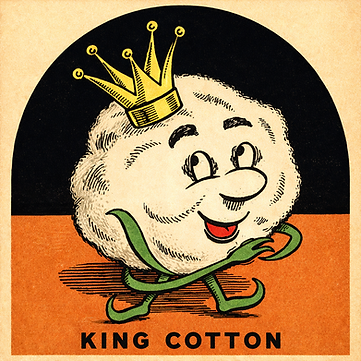
The Confederates had an Ace up their sleeve: King Cotton. The southern states were the largest producers of cotton in the world — cotton that fed the textile mills of the English and French industrial machines. The South believed that it was only a matter of time before the Union blockade would cause the cotton supply to dry up, and without cotton to feed its mills, Britain and France would have no choice but to join the war on the side of the Confederacy. What the South didn't count on was unpredictable European weather. The winter and summer of 1861 were unusually wet, causing food crops to rot in the field across Europe.
Britain already imported 40% of its corn and wheat from the United States, and recognizing the Confederacy as an independent nation would have been as good as declaring war on the Union — which meant goodbye Yankee grain, hello massive famine.
But the Confederacy was so convinced that Southern cotton mattered more to Europe than Northern corn that it decided to burn over a million bales of its own cotton in a desperate attempt to force their hand. Why would they do something so utterly insane? Economics, my dear Watson. Jefferson Davis was trying to create a cotton shortage which he was convinced would collapse the British economy and force them to side with the South once all those unemployed workers started rioting. The only problem with this wildly stupid plan was that before the war, the southern states had sold so much cotton to Britain that they had a three-year surplus. Backfire!
Listen to the audio version.
The Battle of Antietam — September 1862
With King Cotton a bust, the Confederacy's only remaining hope for European support was a decisive victory on Union soil — something dramatic enough to convince Britain and France that a Southern victory was still possible. Robert E. Lee was the man for the job. He had spent two years making Union generals look foolish in Virginia, and now he planned to take the fight north. His plan was simple: outmaneuver the Army of the Potomac, drive through Maryland, and threaten Washington DC itself. Britain was already talking about negotiating a peace treaty that would have handed the Confederacy its independence.
Instead, the two armies clashed in a cornfield near Antietam Creek in Maryland in what became the bloodiest single day in American history — 22,717 dead, wounded, or missing in less than twelve hours. Men were shot down in rows crossing open fields, artillery shredded entire regiments, and a sunken farm road saw so much close-range killing it earned the name Bloody Lane.
The Battle of Antietam ended in a stalemate, but with one-third of Lee's men dead, captured, or wounded. Lee limped back to Virginia with his invasion in shreds and Britain's diplomats — who had been en route to discuss recognizing the Confederacy — quietly turned around and went home.

The battle of Antietam is the bloodiest single-day battle in American history, with a combined tally of 22,717 dead, wounded, or missing
Listen to the audio version.
The Emancipation Proclamation — January 1, 1863
"…all persons held as slaves within any State or designated part of a State the people whereof shall then be in rebellion against the United States shall be then, thenceforward, and forever free."
With these words, President Lincoln made one of the toughest calls of his career. Up until this point, Lincoln had been careful to avoid saying that slavery was even a reason for going to war — even though everyone knew that it was. The Confederacy had never been shy about it, all 11 confederate states named the preservation of slavery in their secession documents.
But Lincoln had a problem. Most white northerners believed they were fighting to restore the Union, not to free enslaved people, and if he made abolition an official war goal, the loyal Border States — slave states that had stayed in the Union — might bolt and leave Washington D.C. surrounded by enemy territory. So Lincoln kept his mouth shut and waited for the right moment.
That moment came after Antietam. With a single piece of paper, Lincoln flipped the script on the entire war. The Union wasn't just fighting to keep some rebels from leaving anymore — it was fighting to destroy slavery. Both Britain and France were firmly against slavery. How could they help a nation win a war to keep its slaves? They couldn't, and they didn't.
Critics called the Proclamation a document that was big on talk and short on teeth — and technically they had a point. It only applied to Confederate states, which meant it didn't actually free anybody in territory where the Union could enforce it. So what did it actually achieve? Quite a bit. Enslaved people across the Confederacy stepped up their resistance — slowing their work, defying their masters, and fleeing to Union camps by the thousands. And it opened the door for Black men to enlist, eventually adding nearly 180,000 soldiers to the Union army who had every reason in the world to fight and win.
Listen to the audio version.
The Battle of Gettysburg — July 1-3, 1863
With Antietam a failure and the Confederacy's hopes for European support effectively dead, Lee tried one more hail mary — another invasion of the North, this time driving straight into Pennsylvania. He was confident, maybe too confident. His cavalry, the eyes and ears of any 19th-century army, was nowhere to be found, leaving Lee essentially blind as he marched into enemy territory.
The battle wasn't even supposed to happen. A Confederate brigade wandered into Gettysburg looking for supplies and stumbled into Union cavalry instead. Within hours both armies were pouring toward the same small Pennsylvania town, and what started as a skirmish pulled in nearly 170,000 men over three brutal summer days. By pure accident, Union General Meade had positioned his men on Cemetery Ridge — a stretch of high ground with steep sides that turned out to be one of the most defensible spots on the entire battlefield. The fighting raged back and forth across Devil's Den, Little Round Top, and the ridge itself, with neither side able to land a knockout blow.
By July 3rd both armies were exhausted, their lines stretched thin, the battlefield carpeted with the dead and dying. Lee, desperate and running out of options, ordered General George Pickett to make one final push to dislodge Meade from Cemetery Ridge. His own generals begged him not to do it. To take the ridge Pickett's men would have to charge 1.5 miles across an open field straight into Union artillery and rifle fire. Lee ordered it anyway. For two hours Confederate cannon bombarded the Union position — and aimed too high. When Pickett's 12,000 men stepped off at 3 p.m. they were mowed down like grass. When the smoke cleared, the Confederacy had lost around 28,000 men — men they had no way to replace. Lee never invaded the North again.
Listen to the audio version.
Sherman’s March to the Sea — August- December 1864
The war was finally going well for the Union. The south was on the verge of collapse: most of its people were starving, plantations across the Deep South had stopped growing cotton and switched to growing food instead. Tennessee was back under Union control and Grant’s capture of Vicksburg gave the north full control of the Mississippi River, cutting Texas and Arkansas from the rest of the Confederacy. But still, those stubborn rebels refused to give in. General William T. Sherman was about to launch a reign of utter ruin against the very heart of the South.
In May 1864, Sherman started off his “March to the Sea” from his base in Chattanooga onto his main target of Atlanta, Georgia. Atlanta was the supply hub of Confederacy where major rail lines met and carried goods across the south and on to Richmond. In addition to railroads, Atlanta had several factories that were all dedicated to producing ammunition and war supplies. Sherman’s intention was to bring an end to the south’s ability to keep the war going.
Standing in Sherman’s way were the Confederate forces of General Johnston (later replaced with General Hood) whose mission was to prevent Sherman from reaching Atlanta. Sherman preferred to use speed to his advantage. Sherman’s plan was not to completely conquer and occupy, but destroy the south’s ability to wage war. So he used speed to his advantage, attacking and dodging the enemy but all the while marching towards Atlanta. Along the way Sherman ordered his men to destroy the plantations, crops, and farm animals, free the slaves and create total economic chaos.
Anything that couldn’t be carried off by the Union was to be burned. This war strategy is called “scorched earth” and nobody did it quite like Sherman. When Sherman and his 100,000 men reached the outskirts of Atlanta on July 22, 1864, they dug in for a long siege. Union shells began blasting Atlanta and would continue until the end of August.
By that time the citizens of Atlanta were starving and forced to eat grass, roots, cats, dogs, and horses. Hood criticized Sherman for his attack on a civilian city (6 civilians had been killed in the shelling) but Sherman responded that the citizens were traitors and had it coming.
Towards the last days of the siege, Sherman hatched another sneaky plan. He left a few thousand soldiers to continue the siege while he took the main army to the railroad depot of Jonesboro and then to Macon. General Hood thought Sherman had given up and was retreating and gave chase. By the time Hood realized his mistake Jonesboro, Macon, and Atlanta were now in Union hands. The fall of Atlanta pretty much ensured Lincoln’s reelection.
In November, Sherman ordered anything in Atlanta that could support the war effort to be burned. He then turned toward Savannah — one of the last southern ports still in Confederate hands. Along the way he left a swath of charred plantations, upturned railroads, and smoldering towns. Wherever Sherman’s army marched, throngs of African Americans — both enslaved and free — lined the roads to greet him, and thousands fell in behind his columns heading toward freedom. On December 13, Sherman arrived at Savannah, and after 15 minutes the poorly defended Fort McAllister surrendered. Sherman’s March to the Sea was complete.
“We are not only fighting armies, but a hostile people, and must make old and young, rich and poor, feel the hard hand of war, as well as their organized armies. I know that this recent movement of mine through Georgia has had a wonderful effect in this respect. Thousands who had been deceived by their lying papers into the belief that we were being whipped all the time, realized the truth, and have no appetite for a repetition of the same experience.”

William T. Sherman

Sherman's March from Chattanooga to Raleigh
Source: Wikimedia Commons
Listen to the audio version.
The Surrender of Lee — Spring 1865
By March 1864, Lincoln had seen enough. After going through six generals in the East, he gave Grant command of all Union forces. When advisers warned Lincoln that Grant drank too much, Lincoln reportedly replied that maybe he should find out what brand and send a case to all his other generals. Grant got results — and that was all Lincoln cared about.
Throughout the summer of 1864, Grant chased Lee through Virginia like a dog on a fox hunt. The final year of the Civil War saw some of the most vicious fighting of the entire war. When Lee attacked Grant at the Battle of the Wilderness he inflicted 17,000 Union casualties. Previous Union commanders would have retreated back to Washington after a blow like that, but not Grant. He pressed on, writing back to Washington that "whatever happens, there will be no turning back." Soldiers began pinning death notes to their shirts to send one last letter home in case they were killed. At Cold Harbor Grant lost another 7,000 men. By the end of June his army had lost 50,000 total — yet Grant pressed on. Lee had lost 30,000, but every one of those men was irreplaceable. When all was said and done, Grant lost around 1 in 10 men to Lee's 1 in 5. Grant's critics called for him to be replaced and claimed he had gone insane. Lincoln ignored them.
Grant also had an advantage Lee didn't — the Colored Regiments. The Emancipation Proclamation had opened the door for Black men to enlist, and by the end of the war nearly 180,000 had. They served in units called the United States Colored Troops — segregated regiments with mostly white officers, lower pay, and a grim extra risk: Confederate forces sometimes executed Black soldiers rather than taking them prisoner. They enlisted anyway. Every person who escaped to Union lines or raised a weapon against the Confederacy was a double blow — one more body for the Union, one less for the South.
While Sherman was marching his troops through Georgia, Grant was moving to capture the vital railroad depot of Petersburg, just south of Richmond. After a failed assault Grant dug trenches around the city and began a siege to starve it into submission. Petersburg surrendered on April 3, 1865. Richmond — the Confederate capital — fell the same day. Lee retreated west hoping to link up with other Confederate forces and fight on, but Grant cornered him on April 9 at a small crossroads village called Appomattox Court House. After a short skirmish Lee agreed to surrender. Confederate soldiers could keep their horses but had to turn over their weapons. At 4 o'clock the two generals shook hands, bowed to one another, and left the room. The war that had left 630,000 Americans dead was over. The Union had been preserved.


Listen to the audio version.
What Came Next: Reconstruction
Winning the war turned out to be the easy part. Now came the hard question: what do you do with eleven states that just spent four years trying to leave? Four million enslaved people had been freed, but freedom on paper and freedom in practice were two very different things. The plantations were destroyed, the Southern economy was in ruins, and the men who had led the rebellion were still walking around free. Lincoln’s plan was to bring the Southern states back into the Union as quickly and painlessly as possible — his famous “with malice toward none” approach. But Lincoln was assassinated in April 1865, just days after the war ended, and the debate over how to rebuild the South — and what rights the formerly enslaved would actually have — was left to a Congress and a new president with very different ideas. That debate, and the decade-long struggle that followed, is called Reconstruction.
Digging Deeper
Use the article to answer the questions below.
-
What advantages did the Union have that helped it win the Civil War?
-
What advantages did the Confederacy have at the start of the Civil War?
-
Why did the Confederacy lose the Civil War?
-
How did Union control of railroads and rivers help them win the war?
-
How did the Union blockade weaken the Confederate economy and war effort?
-
What role did Abraham Lincoln’s leadership play in the Union victory?
Copy and paste the questions onto a Word or Google Doc
Test Page