Teachers. Subscribe now and amaze exactly 0% of your friends, but you'll get great discounts and news!
THE HISTORY CAT

Listen to the audio version.
One of the biggest epic fails in American history was flawlessly executed in late fall of 1846. The story of the Donner Party is about as American pioneer as you can get. A group of middle-class farming families decides that they could do even better for themselves if they picked up stakes and headed west to California along the legendary Oregon Trail. But rather than settling in the Golden State they ended up cannibalizing one another. Sometimes life works in mysterious ways.
The Donners made every mistake in the book. They started too late in the year, they overloaded their wagons, and the biggest bonehead move of all is that they decided on a shortcut that landed them in the history books for all of the wrong reasons.

James Frazier Reed and Margaret Keyes Reed, survivors of the Donner party.
Listen to the audio version.
The Donner Party Sets Out for California
The Donner family teamed up with the Reed family in Illinois and set out from Independence, Missouri on April 6, 1846. That date was already a problem. Experienced trail guides warned that wagon trains needed to leave by mid-April at the absolute latest to clear the Sierra Nevada before the first mountain snows hit in October. The Donner-Reed Party left on time — barely — but they had no margin for error. Any delay along the way would put them at the mountains in the wrong season. And delays, as it turned out, were coming.
Their second mistake rolled out of Illinois on four wheels. While most pioneers loaded a simple wooden wagon with supplies, James Reed built what his 12-year-old daughter Virginia dubbed the “Pioneer Palace Car” — a two-story covered wagon complete with a built-in stove, spring seating, and bunk beds. James Reed was a wealthy businessman and George Donner a landowner; these were not uneducated families scraping together what they could. But a wagon built for comfort was not built for the mountains. When the terrain got brutal, that extra weight would cost them dearly.

Donner Party Trail Map
Source: https://www.kcra.com/

Listen to the audio version.
Fake Trail Guides and Cons
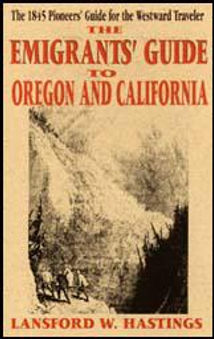
Their third mistake was trusting a man named Lansford W. Hastings. Hastings had written a guidebook called ‘The Emigrant’s Guide to Oregon and California’ that promised a dramatic shortcut through the Great Basin, supposedly shaving 300 miles off the journey. The problem was that Hastings had never even seen “his route.” He was promoting a trail he had never traveled in order to sell books — and the Donner-Reed Party bought it, literally and figuratively. These were educated, successful men who had the resources to ask better questions. They chose not to.
The Donners followed the typical route, following the Platte River to Fort Laramie (up in Wyoming). At the fort, the gang got a letter from none other than Lansford Hastings himself (who ironically was trying to see if his pass through the mountains was even possible). Many of the other families in the party, which had now grown to 200 people, wanted to follow the normal route north. But Hastings’ letters promised to personally take them through the mountains. The fateful decision was made to put their trust in Hastings and his shortcut. On July 19th, the Donner gang reached the Little Sandy River in Wyoming and most decided to part ways and continue along the safer route. Smart move — those families reached California safely that fall. The Donners and Reeds probably thought the others were being overly cautious suckers. Splitting the party was the fourth major mistake that they would make. The one that would seal their fate.
Listen to the audio version.
A Fork in the Road
On July 31st, The Donners arrived at Fort Bridger (still Wyoming) only to learn that Hastings had already taken off with another family. He instructed them to catch up with the others at the mountains. The Donners eventually caught up with Hastings near the Great Salt Lake in Utah.
Ahead, loomed their first major obstacle, the Wasatch Mountains in Utah. The route was filled with debris and they barely made 2 miles a day. Next came crossing the Great Salt Lake Desert where the heavy wagons became bogged down in the soft sand. Forced to abandon a total of four wagons and a loss of 32 oxen, the nerves of the Donner Party were beginning to fray.
And the worst was yet to come. The group finally made it to the shortcut promised by Hastings but at a cost of 125 extra miles — and nearly four extra weeks of travel time. Those were weeks they could not afford. The extra miles drained nearly all of their food and water. And things continued to go from bad to worse. James Reed (head of the Reed household) was banished after stabbing a man to death for abusing his ox. Reed managed to push ahead to Sutter’s Fort, where he would later help organize the rescue — but losing him as a leader mid-journey was a blow the group couldn’t afford.

"I will now give you some good and friendly advice. Stay at home,—you are in a good place, where, if sick, you are not in danger of starving to death."
Mary Graves to Levi Fosdick (her sister Sarah Fosdick's father-in-law), 1847
Attacked by the Paiute
Then came a Paiute counterattack — one that could have been avoided. The party had been crossing Paiute territory without permission, taking water and grazing their animals on land that wasn't theirs. This wasn't unusual behavior for westward travelers; most wagon trains treated Native land as open road. The Paiute responded by killing 21 oxen with poison arrows. For a party already stretched thin, losing 21 animals wasn't just a setback — it was potentially a death sentence.
Listen to the audio version.
Trapped in the Mountains
On October 19th, all 81 members of the Donner Party arrived at the foot of the Sierra Nevada Mountains — the last major obstacle between them and California. There they met up with Charles Stanton, whom they had sent ahead a month earlier to secure supplies. Stanton told them of a clear but difficult path through the mountains. But early snow and more bad luck set them back. George Donner severely cut his hand while chopping wood, forcing him and his family group to make camp about 6 miles short of the main group.
That split proved costly. The party was now divided into two camps with no way to consolidate their people, supplies, or shelter. The larger group of 59 pushed toward the mountain pass — only 12 miles from California — but a freak snowstorm had already dumped five feet of snow, blocking their way. They had no choice but to throw together some crude log cabins and wait it out.
The Donner family group of 22 had it worse. Close enough to see each other's campfire smoke but completely cut off by the snow, they had no log cabins — only tents made from branches and cloth. By Thanksgiving, more than 20 inches of snow had accumulated and the Donners had eaten their last oxen. The day after Thanksgiving, another storm dropped more than 15 feet of snow in the mountains. A few days later the party buried their first dead from malnutrition. There would be more to come.
Motivated by sheer desperation, a volunteer escape group of 17 people from the lake camp set out to walk 100 miles to Sutter's Fort in snowshoes. After a couple of days their food ran out. A couple of days after that another member of the party died — and this time instead of burying him, they ate his corpse. And this act of cannibalism would not be their last.

Photo of tree stumps at the Donner camp site show just how deep the snow was that winter.
Listen to the audio version.
The Rescue Mission
On January 19, 1847, only 10 of the 17 members of the escape group made it to Sutter’s Fort. A rescue mission was organized to bring back the others who were still trapped on the mountain. It took more than two weeks to organize a rescue party. When the first rescue team reached the cabin at Lake Donner, they found 48 people barely clinging to life, many had gone mad. However, the story doesn’t end here. Only 22 people could be taken out this time. When they returned 10 days later for the rest, the rescue party found evidence of more cannibalism.
It would take more than 4 rescue missions and 4 additional months before all of the survivors were brought to the safety of Sutter’s Fort. Of the 86 who went up the mountain, only 47 made it out alive; many of those lost toes to frostbite. News carried stories of their harrowing rescue and the grim tale of cannibalism. Travel through Hastings’ shortcut became a pretty popular choice — to stay away from. That is until gold was discovered in 1849 not far from the cabin where so many died that winter of 1846.

Did the Donner's really become cannibals? New evidence suggests that maybe that story is more hype than history. Click to learn more.
Digging Deeper
Use the article to answer the questions below.
-
What was the Donner Party and why were they traveling west?
-
What mistakes or problems caused the Donner Party to get stuck in the mountains?
-
What were some of the major hardships the Donner Party faced during their journey?
-
How did the experience of the Donner Party show the dangers of westward travel?
Copy and paste the questions onto a Word or Google Doc
Test Page