Teachers. Subscribe now and amaze exactly 0% of your friends, but you'll get great discounts and news!
THE HISTORY CAT


Unit 2: Colonial America
1600 -1750
Indentured Servants and Slavery in Colonial America
Colonial America Lesson Plan | Grades 7-12
Listen to the audio version.
Taking On the Machines
Progressives realized that corruption wasn’t just about crooked politicians — it was about a government that hadn’t kept pace with a modern, industrial nation. If democracy was going to survive, it had to be rebuilt from the inside out.
In Wisconsin, Governor Robert “Fighting Bob” La Follette became the face of that fight. Railroads and lumber barons had dominated his state’s legislature for years, setting their own tax rates and writing their own laws. La Follette pushed back with the Wisconsin Idea — bringing university experts into government to draft evidence-based laws and regulate corporate power. His reforms set railroad rates, taxed corporations fairly, and gave citizens direct primaries to choose candidates instead of leaving nominations to party bosses.
Other states followed. In Oregon, reformers created the initiative, referendum, and recall, letting voters write laws, approve them, or remove corrupt officials altogether. In California, Governor Hiram Johnson took on the Southern Pacific Railroad, banning corporate donations and giving voters the same direct powers.
These reforms culminated in the 17th Amendment (1913), which finally ended the era of purchased Senate seats by establishing the direct election of senators. What had been called “the Millionaires’ Club” now had to answer to the public.
The fight wasn’t easy. La Follette’s enemies tried to bankrupt him, smear him as a radical, and even falsify election results. Reformers across the country faced intimidation, lawsuits, and blacklists. But every scandal exposed by journalists, every recall petition, every honest election chipped away at the old machine.
By the 1910s, the political bosses who had once sold access like merchandise were losing their grip. The Progressives hadn’t wiped out corruption, but they had changed the rules — and for the first time in decades, American democracy looked like it might actually belong to the people.

I'm a paragraph. Click here to add your own text and edit me. It's easy.
Listen to the audio version.
Life as an Indentured Servant
If you were poor in 1600s Europe, your future was already decided—and it wasn’t looking good. There were no safety nets, no job programs, no second chances. But across the Atlantic? There was land, opportunity… and a dangerous deal waiting.
Enter the indentured servant. These were men, women, and even teenagers who couldn’t afford the cost of the voyage to America. So, they signed contracts promising to work anywhere from 4 to 7 years in exchange for passage. Room and board were included. Freedom—if you survived—was the final reward.
Life as an indentured servant was difficult. Most servants worked from sunrise to sunset, doing hard physical labor like clearing land, planting crops, and hauling water. If you got sick or injured, your time could be extended. If you broke the rules, you might be whipped, branded with a hot iron, or punished with more years of labor.
Not all indentured servants signed up willingly. Some were tricked or kidnapped, especially children. Others were convicts, orphans, or war prisoners shipped out by the English government to empty jails and reduce poverty. After the English crushed rebellions in Ireland and Scotland, they rounded up captured soldiers and sent them to the colonies in chains—not as slaves, but not exactly free either.
Between 1650 and 1750, historians estimate that over half of all immigrants to the thirteen colonies came as indentured servants. In places like Virginia and Maryland, they made up the majority of the labor force before slavery became widespread. The colonies didn’t just grow on dreams—they grew on contracts, hardship, and the hope that seven years of pain might lead to a better life.
For some, indentured servitude was a death sentence. Disease, abuse, and exhaustion killed many before they ever finished their contracts. But for those who made it through, freedom in the New World came with real possibilities: land, wages, and independence.
It’s important to note—this was not the same as slavery. Indentured servants had a contract and a way out. Enslaved Africans were forced into labor for life, with no rights, no freedom, and no promises. But both systems were built on exploitation—and both helped fuel the rise of colonial America.

During the peak immigration years (1620-1750) it's estimated that 50-67% of colonists who came to the Thirteen Colonies were indentured servants.

Listen to the audio version.
Slavery in the Colonies
Long before English ships arrived in Jamestown, Spain had already started bringing enslaved Africans to the Americas. As early as 1502, enslaved people were transported to Hispaniola to replace Native laborers who were dying in huge numbers due to disease, starvation, and overwork. By 1518, the Spanish crown officially authorized traders to import Africans directly from West Africa to the New World—launching what became one leg of the Transatlantic Slave Trade.
The Spanish used enslaved Africans throughout their empire—from sugar plantations in the Caribbean to silver mines in South America. These early forced migrations laid the groundwork for a system of slavery that would expand across the Americas for centuries.
The first recorded Africans arrived in Virginia in 1619. At first, some of them may have worked as indentured servants, like poor Europeans, with the possibility of earning their freedom. But by the late 1600s, colonial laws started to change. These new laws made a clear difference between European servants and Africans, who were increasingly treated as slaves for life. Over time, slavery became based on race. African people—and their children—were now considered property, with no path to freedom. This marked the beginning of race-based slavery in the English colonies.
By the 1700s, chattel slavery—where people were treated as property—was deeply woven into the Southern economy. Crops like tobacco, rice, sugar, and indigo relied heavily on enslaved labor. Colonies grew rich, while millions of Africans were kidnapped from their homes, shipped across the ocean in horrific conditions, and forced to work under brutal conditions.
Still, enslaved people resisted in every way they could—through rebellion, escape, sabotage, and secretly preserving their language, music, and traditions. Their stories are often left out, but they were vital to the history and economy of colonial America.
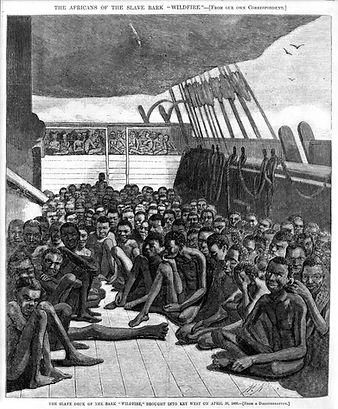
The Slave Deck of the Bark “Wildfire”
Listen to the audio version.
I'm a paragraph. Click here to add your own text and edit me. It's easy.
Exit Ticket
Take a stand on one of these questions. Use 3-5 sentences to explain your thinking based on what you just read.
Exit Ticket 1: The Personal Cost of Democracy
If you were a student in 1964 and knew that attempting to register to vote meant your name would be published in the local newspaper—making you an immediate target for the Klan—would you have still gone to the courthouse?
Exit Ticket 2: The Catalyst for Change
For nearly a century, the federal government avoided interfering in Mississippi's voting laws. Then, following the 1964 murders in Neshoba County and the 1965 violence of 'Bloody Sunday,' they passed the Voting Rights Act. Why do you think it took these specific, tragedies to finally force a change in the law?
Test Page